Salt, Spice, and Spirits: The Art of Elevating a Premium Cup Beyond the Bean Itself
There is a persistent myth in specialty coffee culture—one that holds the finest beans as self-sufficient, requiring nothing beyond precise water temperature and an attentive hand on the grinder. It is a view that carries genuine merit. When you have invested in a rare single-origin, the instinct to preserve its integrity is both natural and admirable. Yet a growing community of home enthusiasts and forward-thinking café operators across the United States is quietly challenging that orthodoxy, not by masking the bean's character, but by discovering the precise companions that allow it to speak more fully.
This is not a story about novelty for its own sake. It is, at its core, a story about synergy—about the way a premium Ethiopian Yirgacheffe, already alive with jasmine and stone fruit, can become something genuinely breathtaking when a single green cardamom pod is introduced during the bloom stage of a pour-over. Or how a well-rested Guatemalan Huehuetenango, with its dark chocolate foundation, finds unexpected depth alongside a half-teaspoon of smoked Maldon salt stirred into the finished cup.
The framework is simple, even if the execution rewards patience: choose an addition that converses with the bean rather than talking over it.
The Case for Spice: Ancient Wisdom Meets Modern Specialty Coffee
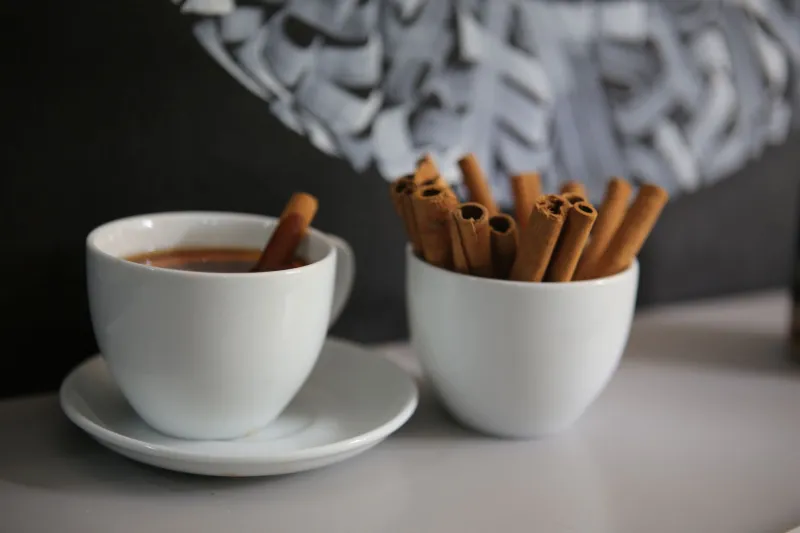
Long before the third-wave coffee movement codified the language of tasting notes, spiced coffee was a staple of Ethiopian, Middle Eastern, and South Asian culinary traditions. What contemporary enthusiasts are rediscovering is that these traditions were never primitive shortcuts—they were sophisticated flavor architectures built over centuries of sensory refinement.
Cardamom remains the most celebrated of these companions, and for good reason. Its volatile aromatic compounds—primarily terpinene and cineole—share a chemical kinship with the floral esters present in washed African coffees, creating a resonance rather than a clash. The key, as any thoughtful home barista will attest, lies in restraint. A single cracked pod introduced to the grounds before brewing is sufficient to lift the cup; a heavy hand produces something medicinal and distracting.
Beyond cardamom, the experimental palate finds rich territory in star anise (a natural partner for dark-roasted Indonesian Sumatra), a whisper of freshly grated nutmeg (which amplifies the caramel registers in a well-developed Colombian), and even a small quantity of dried rose petals, which several specialty cafés in cities like Portland and Chicago have begun incorporating into their house pour-over protocols to remarkable effect.
The governing principle across all spice additions is the same one that disciplines any act of culinary composition: the addition must serve the primary ingredient, not compete with it.
Spirits as a Finishing Element: The Evening Cup Reimagined
The relationship between coffee and alcohol is, of course, as old as the Irish coffee itself. What distinguishes the contemporary approach is its emphasis on complementarity at the flavor compound level, rather than mere combination for warmth or conviviality.
Consider the pairing of a naturally processed Yemeni Mocha—dense with dried fruit, dark spice, and an almost wine-like fermentation note—with a measured addition of aged rum. The congeners present in a well-aged agricole rum mirror the cup's own fermented complexity, producing a finish of extraordinary length. This is not a cocktail. It is, rather, a considered finishing gesture: no more than a quarter-ounce added to a six-ounce cup, introduced after brewing so that the heat does not volatilize the spirit's more delicate aromatic compounds.
Bourbon, that most American of spirits, has proven a natural ally to medium-roasted Central American coffees. The vanillin and caramel notes imparted by new American oak in the aging process find immediate kinship with the brown sugar and hazelnut registers common in Costa Rican and Honduran lots. For those who prefer a lighter touch, a small quantity of Amaro—the Italian herbal liqueur—introduces a botanical bitterness that can bring welcome structure to a naturally sweet, low-acid coffee.
It bears emphasis that this approach is not about masking the bean behind alcohol. The spirit is a supporting player. If its presence overwhelms the coffee's own character, the proportion requires adjustment.
The Unexpected Catalyst: Salt, Fat, and the Science of Perception
Perhaps the most counterintuitive addition in the specialty coffee enthusiast's toolkit is also the most scientifically grounded: salt. Research into taste perception has long established that sodium ions suppress bitterness receptors on the palate, which explains why a small quantity of high-quality salt—fleur de sel, Himalayan pink, or smoked sea salt—can transform a cup that reads as harsh or astringent into something smoother and more integrated.
Beyond bitterness suppression, salt performs a secondary function that is harder to quantify but immediately perceptible: it amplifies sweetness. This effect is particularly pronounced in naturally processed coffees, where the inherent fruit sugars are already prominent. A pinch—no more—added directly to the grounds before brewing produces a finished cup with a rounder, fuller sweetness that requires no additional sweetener.
Fat, too, has its advocates. The Bulletproof movement introduced many American consumers to the idea of adding butter or MCT oil to coffee, though the specialty community has largely approached this practice with skepticism, concerned about its tendency to coat the palate and diminish the perception of more delicate aromatic notes. A more refined variation involves a small quantity of full-fat coconut cream—particularly effective with Southeast Asian coffees—or a half-teaspoon of high-quality cultured butter added to a dark-roasted blend. The fat binds to certain volatile aromatic compounds, slowing their release and producing a longer, more sustained finish.
Building Your Own Framework: A Starting Point for Exploration
The most productive approach to culinary fusion in coffee is methodical rather than improvisational. Begin with a bean whose flavor profile you know intimately—one you have brewed repeatedly and whose characteristics you can articulate with reasonable confidence. Introduce a single addition in a minimal quantity, taste carefully, and adjust. Resist the temptation to layer multiple additions simultaneously; each new variable complicates your ability to understand what is working and why.
Keep notes. The discipline of recording your experiments—the bean, the addition, the quantity, the brewing method, and your honest assessment of the result—accelerates the learning curve considerably and transforms a series of pleasant afternoons into a genuine and growing expertise.
At Fusion 20 Luxury Beans, we have always believed that a premium bean is not an endpoint but an invitation. The world's most extraordinary coffees carry within them a multitude of latent possibilities, and the most rewarding pursuit available to any serious enthusiast is the patient, curious work of discovering them—one thoughtful addition at a time.