Beyond the Bean: How Thoughtful Pairings Are Unlocking Hidden Dimensions in Rare Coffee
For generations, the ritual of premium coffee consumption has been treated as a largely solitary experience — one cup, one origin, one moment of contemplative sipping. Yet within the most sophisticated corners of the American specialty coffee scene, that paradigm is quietly dissolving. A growing cohort of coffee professionals, sommeliers, and culinary innovators are demonstrating something both surprising and scientifically sound: that the flavors dormant within a rare bean may only fully awaken in the presence of something else entirely.
This is not a casual trend. It is a disciplined, sensory-driven movement that borrows as much from the traditions of fine wine pairing as it does from the chemistry of taste perception. And for those who invest in truly exceptional beans — the kind that carry the fingerprints of a specific hillside, a single harvest, a particular fermentation protocol — understanding this principle may permanently alter how they approach every cup.
The Science of Synergistic Flavor
To appreciate why pairing matters, one must first understand how flavor perception actually operates. The human palate does not experience taste in isolation. Every sip of coffee is processed alongside ambient aromas, the residual presence of recently consumed foods, and even the texture of what accompanies it. Sensory scientists refer to this phenomenon as "flavor-flavor interaction" — the measurable way in which one taste compound either suppresses or amplifies another.
Coffee, particularly at the specialty and rare end of the spectrum, contains an extraordinary number of volatile aromatic compounds — often exceeding eight hundred distinct molecules in a single roasted bean. Many of these compounds remain perceptually muted during a standard tasting. However, when the palate is primed by a complementary flavor agent, the brain's ability to isolate and appreciate those subtle notes expands considerably.
Consider a naturally processed Ethiopian Yirgacheffe, celebrated for its blueberry and jasmine characteristics. Consumed alongside a small portion of dark chocolate with a high cacao percentage, the fruit-forward qualities of the coffee become markedly more pronounced. The bitterness of the chocolate recalibrates the palate's sensitivity, effectively clearing the sensory slate so that the coffee's more delicate notes can register with greater clarity.
What Coffee Professionals Are Discovering
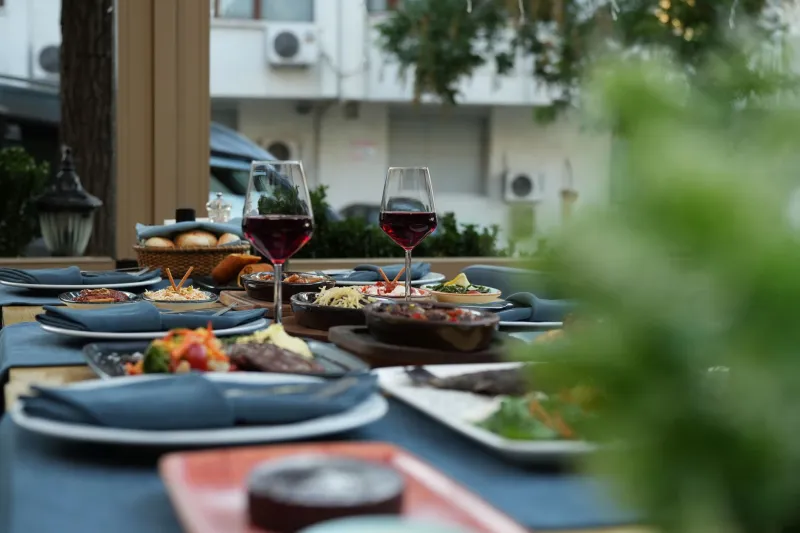
Across cities like New York, San Francisco, Chicago, and Portland, specialty coffee professionals have begun curating formal pairing experiences that rival the sophistication of a fine-dining tasting menu. These are not casual café add-ons. They are structured, multi-course engagements designed to guide participants through a deliberate sensory progression.
One recurring observation among these practitioners is that certain wine varietals serve as remarkable palate companions to specific coffee origins. A lightly oxidized Fino Sherry, for instance, shares enough aromatic DNA with a washed Yemeni Mocha — with its characteristic dried fruit, walnut, and subtle brine — that sipping one immediately after the other creates a kind of flavor resonance. The coffee seems, paradoxically, more itself in that context.
Spice pairings have also yielded remarkable results. Green cardamom, long a traditional companion to coffee in Middle Eastern and South Asian cultures, is now being approached with far greater precision by American coffee professionals. Rather than simply adding the spice to the brew, forward-thinking tasters are exploring what happens when cardamom is simply present in the aromatic environment — a small dish of freshly cracked pods placed near the cup — allowing the nose to integrate the compound without the palate being directly altered. The effect on the perception of a floral, high-grown Guatemalan bean can be quietly revelatory.
The Role of Texture and Temperature
Pairing is not exclusively a matter of flavor compounds. Texture plays an equally consequential role in how coffee's complexity registers. When a rare bean with pronounced acidity — a Kenyan AA, for example, with its characteristic black currant and tomato brightness — is sipped alongside a small quantity of aged Manchego cheese, the fat content of the cheese coats the palate in a way that briefly tempers the coffee's acidity. What emerges in the subsequent sip is a longer, more nuanced finish, with secondary flavor notes — cedar, dried citrus peel, a whisper of brown sugar — that the acidity might otherwise have obscured.
Temperature differentials are similarly instructive. Allowing a cup of a complex, lightly roasted Panamanian Geisha to cool incrementally across a tasting session, while alternating sips with small bites of a mild, cultured butter on brioche, reveals how dramatically the bean's flavor profile evolves as it descends through temperature ranges. Notes that are barely perceptible at 170°F become vivid and expressive at 120°F, particularly when the palate has been conditioned by the brioche's subtle sweetness.
Curating Your Own Pairing Experience
For the enthusiast who wishes to explore this discipline at home, a few foundational principles are worth observing. First, restraint is essential. The purpose of any pairing is to illuminate the coffee, not to overwhelm or disguise it. Any accompaniment should be selected because it shares or gently contrasts with the bean's known flavor profile, not because it is independently impressive.
Second, sequence matters. The order in which you engage with each element of a pairing significantly affects the outcome. As a general rule, begin with the coffee in its purest state, establishing a sensory baseline before introducing any pairing element. This allows you to perceive the contrast and enhancement more precisely.
Third, documentation rewards patience. Keeping a tasting journal that records not only your impressions of the coffee itself but also the specific pairings you explored and their effects will, over time, reveal patterns that are unique to your own palate. This is one of the most meaningful ways to develop genuine sensory literacy — and to deepen your relationship with the remarkable beans that merit this level of attention.
A New Standard for Appreciation
At Fusion 20 Luxury Beans, we have always believed that a truly exceptional bean deserves to be met with an equally exceptional level of engagement. The emerging practice of intentional flavor pairing is not a departure from that philosophy — it is its natural extension. When you invest in a rare, meticulously sourced coffee, you are acquiring something with genuine depth. The question pairing asks is simply this: are you giving that depth every possible opportunity to reveal itself?
The answer, for a growing number of discerning enthusiasts, is becoming a resounding and curious yes.