The Alchemy of Contrast: Why the Most Celebrated Specialty Coffees Are Born from Improbable Origins
There is a certain comfort in convention. For decades, the specialty coffee world has operated on a relatively settled set of assumptions: bright, floral Ethiopian naturals pair elegantly with washed Guatemalan beans; Colombian milds soften the earthy intensity of a Sumatran wet-hulled lot. These pairings feel logical, even inevitable — two voices harmonizing in a register the palate already understands.
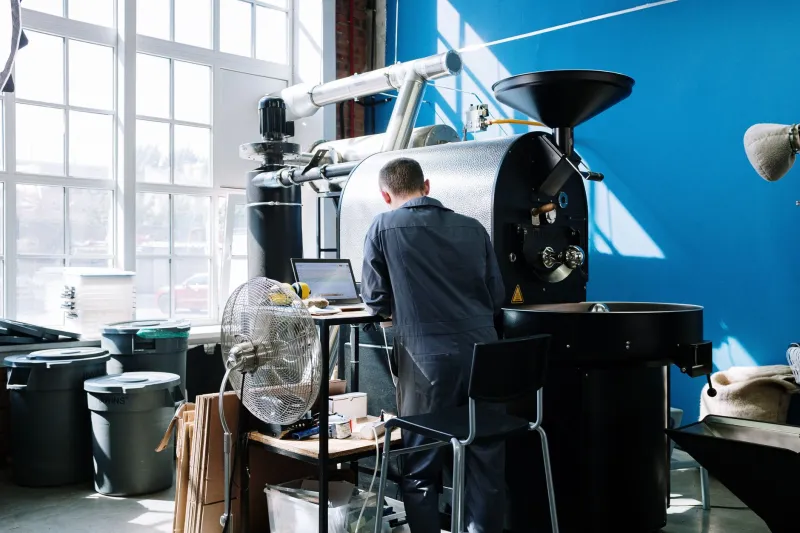
But a quietly disruptive cohort of roasters across the United States is abandoning that comfort with deliberate intent. They are reaching across hemispheres, across processing philosophies, and across flavor profiles that seem, on paper, to have no business sharing a roasting drum. And the coffees emerging from these experiments are among the most talked-about — and most debated — cups in the country.
Breaking the Grammar of Origin Pairing
Conventional blending logic is, at its core, a grammar: certain origins play certain roles. A natural Ethiopian provides fruit and complexity; a Brazilian natural contributes body and chocolate; a washed Kenyan sharpens acidity. Roasters have long used these roles interchangeably, assembling blends the way a composer arranges familiar instruments.
The new wave of avant-garde blenders is not merely writing new music — they are questioning whether the instruments themselves should remain segregated. Consider the pairing of a Yirgacheffe natural, with its signature blueberry and jasmine aromatics, alongside a Sulawesi wet-hulled bean carrying deep notes of dark earth, cedar, and black pepper. On paper, this reads as a collision. In the cup, roasters who have pursued this combination report something stranger and more interesting: a tension that resolves into unexpected caramel and dried fig, with a finish that lingers far longer than either component would alone.
"We stopped asking whether two origins should work together," explains one prominent Pacific Northwest roaster who has built a devoted following around what he terms 'geographic dissonance blends.' "We started asking what happens when they're forced into conversation. Sometimes it's noise. But sometimes it's a dialect nobody has spoken before."
The Science Beneath the Surprise
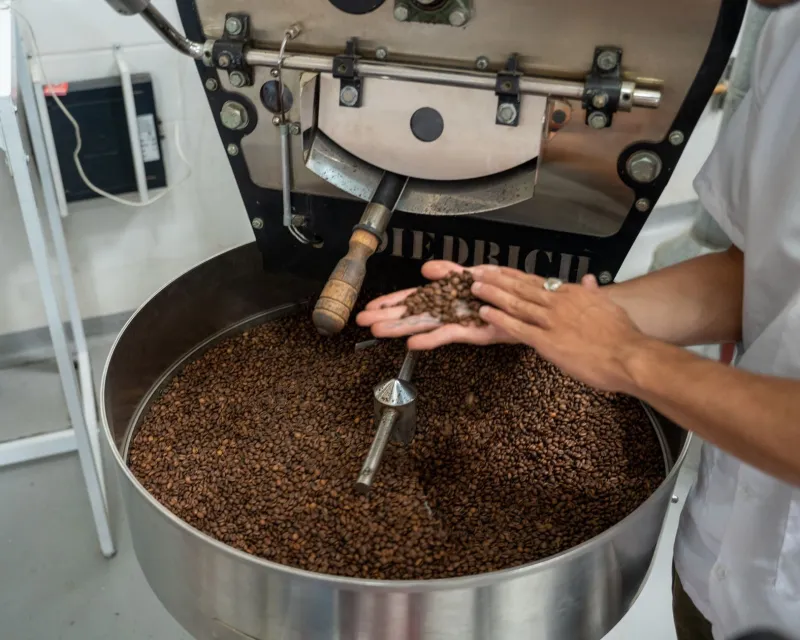
Understanding why improbable origin pairings occasionally produce transcendent results requires a brief detour into chemistry. Coffee flavor is the product of hundreds of volatile aromatic compounds — furans, pyrazines, aldehydes, and organic acids — that interact during roasting in ways that are only partially predictable. When two beans with dramatically different compound profiles are roasted together or blended post-roast, the interactions between those compounds can generate entirely new aromatic expressions that neither bean produces independently.
This phenomenon, sometimes called synergistic flavor development, is well-documented in the culinary world. Chefs have long understood that combining ingredients with contrasting flavor compounds — fat with acid, umami with sweetness — produces outcomes more complex than the sum of their parts. Specialty coffee roasters are now applying the same principle at origin level, treating geographic provenance as a flavor variable rather than a categorical boundary.
What makes this particularly compelling for the American specialty coffee consumer is that the results are rarely subtle. These are not blends designed to sand down rough edges or achieve a safe, approachable cup. They are statements — sometimes polarizing ones — that demand engagement from the drinker.
Why Polarizing Often Becomes Beloved
There is a well-documented pattern in the history of artisanal food culture: the flavors that initially provoke the strongest resistance frequently become the most sought-after once a critical mass of consumers develops the vocabulary to appreciate them. Natural wine, aged funky cheeses, high-cacao dark chocolate — each faced skepticism before cultivating devoted followings among those willing to invest in the learning curve.
Unconventional origin blends are following an identical trajectory. Roasters who have released experimental lots pairing, say, a Panamanian Geisha with a robust Robusta-adjacent Ugandan bean have reported initial confusion from their customer base — followed, months later, by some of their strongest repeat purchase rates. The cup that challenges becomes, with familiarity, the cup that captivates.
This dynamic is not accidental. When a flavor profile defies expectation, it forces the drinker into a more active mode of attention. The palate, unable to rely on pattern recognition, must actually work — and that effort, when rewarded with genuine complexity, creates a more memorable sensory experience than any perfectly harmonious blend ever could.
Developing the Palate for Geographic Dissonance
For the enthusiast eager to explore this frontier, the entry point is intentional tasting rather than passive consumption. Begin by building familiarity with the individual character of single-origin coffees from regions that seem stylistically opposed: the bright, wine-like acidity of a washed Kenyan versus the syrupy, tobacco-laced depth of a Nicaraguan natural. Understand what each brings to the table independently before attempting to evaluate them in combination.
From there, approach experimental blends with the same structured curiosity you might bring to a vertical wine tasting. Note the initial aroma before the first sip. Track how the flavor evolves across the temperature range — many counterintuitive blends reveal their most interesting characteristics as the cup cools. Pay attention to the finish: length, texture, and any flavors that emerge only in retrospect.
Keep a tasting journal. The vocabulary for these blends does not yet exist in standardized form, which means the language you develop through your own notes is as valid as anything a professional cupper might offer. This is, in fact, part of the appeal — these are coffees that invite personal interpretation rather than demanding consensus.
The Roaster's Responsibility
For all its creative excitement, the pursuit of geographic dissonance carries genuine responsibility. Not every improbable pairing yields a transcendent result, and the specialty coffee community has been appropriately skeptical of novelty for its own sake. The roasters earning lasting respect in this space are those who approach the work with rigor: cupping hundreds of combinations before releasing a single product, documenting their process with the same transparency they would apply to a single-origin offering, and communicating honestly with consumers about what to expect.
At Fusion 20 Luxury Beans, we have long believed that the most extraordinary moments in coffee come from the willingness to ask questions that feel uncomfortable. Why does this combination work? What does 'work' even mean when the goal is not comfort but revelation? The roasters driving this movement are asking exactly those questions — and the answers, cup by cup, are expanding what the specialty coffee experience can be.
The alchemy of contrast is not a trend. It is a philosophy. And for those willing to follow it, the rewards are as rare as the beans themselves.