Beyond Borders: How Adventurous Roasters Are Crafting Multi-Origin Blends That Rewrite the Rules of Specialty Coffee
For the better part of two decades, the specialty coffee world has operated under something close to a doctrine: single-origin coffee is the pinnacle of the craft. The logic has always been compelling. When you drink a washed Ethiopian Yirgacheffe or a naturally processed Guatemalan Huehuetenango, you are tasting a specific place, a specific altitude, a specific set of hands. The terroir is legible. The story is intact.
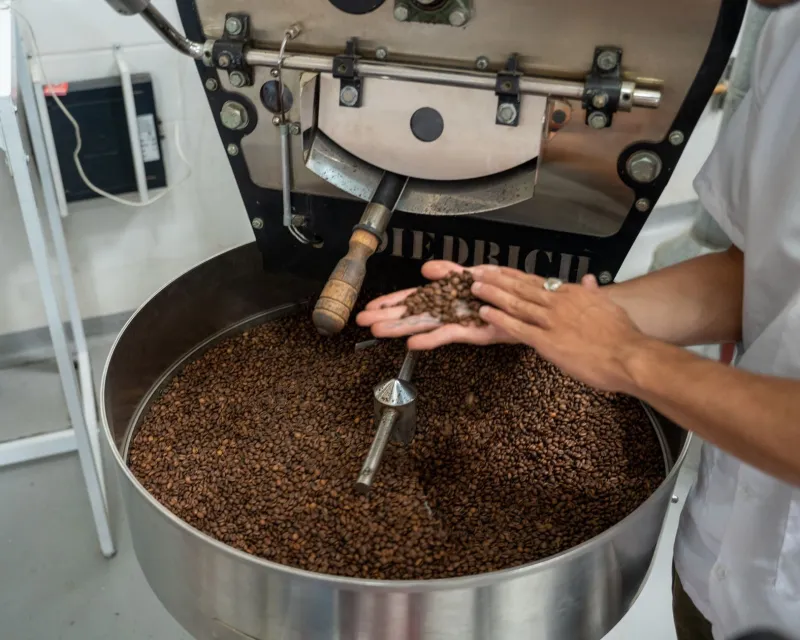
But a quiet revolution is underway in the roasting rooms of America's most ambitious specialty producers. A cohort of forward-thinking roasters — many of them trained in fine dining, sommelier programs, and even perfumery — is deliberately combining three, four, and sometimes five distinct origins into what the industry is beginning to call micro-blends. These are not the anonymous amalgamations that fill supermarket cans. They are considered, almost architectural compositions, designed to achieve flavor experiences that no single origin could sustain on its own.
At Fusion 20 Luxury Beans, we have spent the past several months speaking with roasters, sensory scientists, and green coffee buyers who are shaping this movement. What we found challenges nearly every assumption that premium coffee enthusiasts hold dear.
The Difference Between Blending and Blending
It is worth pausing to distinguish what these roasters are doing from what the commodity industry has always done. Commercial blending is, at its core, an exercise in consistency and cost management. Roasters combine origins to produce a stable, predictable flavor profile at a price point that moves volume. Terroir is not a consideration. Individual bean character is, in fact, something to be minimized.
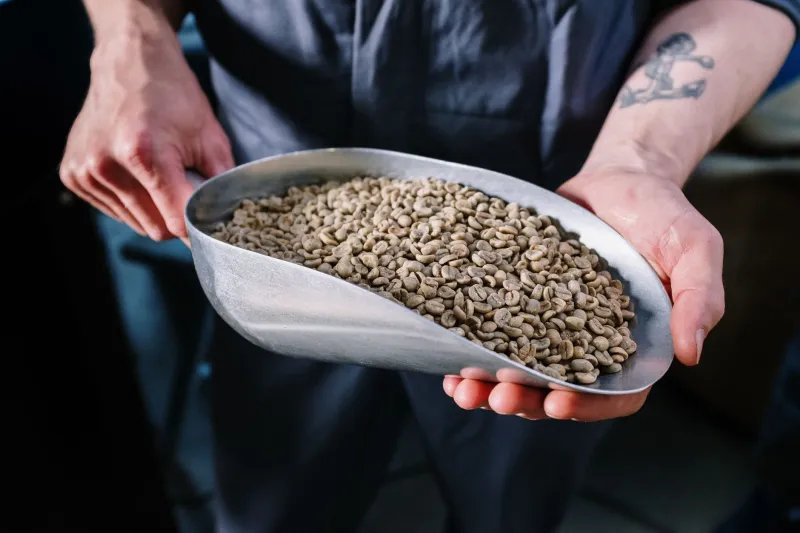
Micro-blending, as practiced by the roasters profiled here, operates from an entirely opposite philosophy. Each component origin is sourced with the same rigor applied to a single-origin offering. Green buyers visit farms, cup extensively at origin, and select lots with specific sensory targets in mind. The blending itself happens only after each lot has been individually profiled and its contribution to the final cup has been precisely mapped.
"I think about it the way a chef thinks about a composed dish," explains one Seattle-based roaster who has been developing multi-origin blends for the past three years. "Every component has to earn its place. If a Kenyan AB is in the cup, it's there because its blackcurrant brightness does something that nothing else can. The moment it becomes filler, the whole thing falls apart."
Terroir Integrity in a Multi-Origin Cup
The most persistent objection from single-origin purists is that blending, however artful, inevitably obscures the individual character of each component. If a Burundi and an Ethiopian and a Colombian are all sharing the same cup, does any one of them remain truly itself?
It is a fair philosophical question. The roasters pushing this approach have a practical answer: the goal is not to preserve each origin as a discrete, identifiable element, but to allow each one to contribute its most expressive qualities to a larger whole. The Colombian washed lot might bring its structured acidity and clean finish. The Ethiopian natural might introduce floral top notes and a jammy sweetness. A small percentage of a Sumatran wet-hulled bean — perhaps no more than eight or ten percent of the total blend — might provide a low, earthy resonance that grounds the entire composition.
What results is not a cup where you are tasting three or four things simultaneously. It is a cup where you are tasting something that could not exist without all of them.
A roaster based in Portland, Oregon, who sources exclusively from women-led cooperatives across four continents, describes her five-origin blend as "a conversation rather than a monologue." Her current offering draws from a washed Rwandan, a honey-processed Costa Rican, a natural Ethiopian, a washed Colombian, and a very small inclusion of a rare Yemeni Mocha lot. The result, which we had the privilege of cupping during our research, presents an initial wave of stone fruit and hibiscus, gives way to a mid-palate of milk chocolate and toasted almond, and finishes with a whisper of dried fig and cedar. No single origin in the blend produces that arc. Together, they do.
The Sensory Science Behind the Craft
What separates successful micro-blending from costly experimentation is a rigorous understanding of how flavor compounds interact. Many of the roasters at the forefront of this movement have invested in professional sensory training, some through the Specialty Coffee Association's Q Grader program, others through partnerships with food science departments at universities.
The chemistry is nuanced. Certain volatile aromatic compounds amplify one another when combined — a phenomenon sometimes called sensory synergy. Others compete, with one suppressing the perception of another. Acidity levels interact with sweetness in ways that can either enliven or flatten a cup. Roast development across multiple origins must be calibrated so that no single component dominates the extraction in ways that throw the blend out of balance.
"The biggest mistake I see in early blending attempts is roasters treating the blend as an afterthought," notes a green coffee buyer with fifteen years of sourcing experience across Central America and East Africa. "You have to design backward from the cup you want. That means knowing what each lot will do before you ever put them together."
What This Means for the Discerning Enthusiast
For those who have built their coffee practice around single-origin exploration, the emergence of sophisticated micro-blends presents both an opportunity and a question worth sitting with. The opportunity is obvious: cups of extraordinary complexity that reward careful attention and repeat brewing. The question is whether the transparency that defines premium single-origin coffee — the named farm, the known elevation, the documented processing method — can be preserved in a multi-origin context.
The most credible roasters in this space are responding to that question directly. They are publishing detailed blend notes that name every origin, every processing method, and every farm or cooperative in the cup. They are hosting public cuppings where enthusiasts can taste each component individually before experiencing the assembled blend. They are, in short, treating transparency as non-negotiable even as they embrace compositional complexity.
The parallel to fine wine blending is one that comes up repeatedly in these conversations, and it is instructive. A Bordeaux is not diminished by its Merlot because it also contains Cabernet Sauvignon. The blend is the expression. The question is only whether the hands guiding it are skilled enough, and honest enough, to make something worthy of the fruit.
A New Vocabulary for a New Kind of Cup
The language of specialty coffee has always been borrowed — from wine, from gastronomy, from the sensory sciences. As micro-blending matures, it may require a vocabulary of its own. Terms like "fusion profile," "origin layering," and "compositional sourcing" are already appearing in tasting notes and roaster communications.
What seems certain is that the conversation is no longer simply about where a bean comes from. It is increasingly about what a roaster can reveal by placing that bean in deliberate company with others from across the world's coffee-growing latitudes. For the enthusiast willing to follow these roasters into less charted territory, the rewards are considerable.
The single-origin cup remains a profound and irreplaceable experience. But the multi-origin micro-blend, done with integrity and craft, is beginning to demonstrate that the story of what coffee can be is still very much being written.