From the Ground Up: How Soil, Elevation, and Climate Shape the Flavors in Your Cup
There is a word borrowed from the world of fine wine that has quietly become indispensable to the language of specialty coffee: terroir. Derived from the French term for "land" or "earth," it describes the complete environmental fingerprint of a growing region—the sum of its altitude, soil composition, rainfall patterns, temperature swings, and even the microorganisms thriving beneath the surface. For those who appreciate truly exceptional beans, terroir is not an abstraction. It is the reason a washed Ethiopian Yirgacheffe tastes nothing like a natural-processed Sumatran Mandheling, even when both are roasted to an identical profile by the same skilled hand.
At Fusion 20 Luxury Beans, we believe that understanding what your cup is telling you is inseparable from understanding where it was grown. The following is an exploration of the geographical forces that distinguish the world's most coveted specialty coffees from everything else on the shelf.
Why Altitude Changes Everything
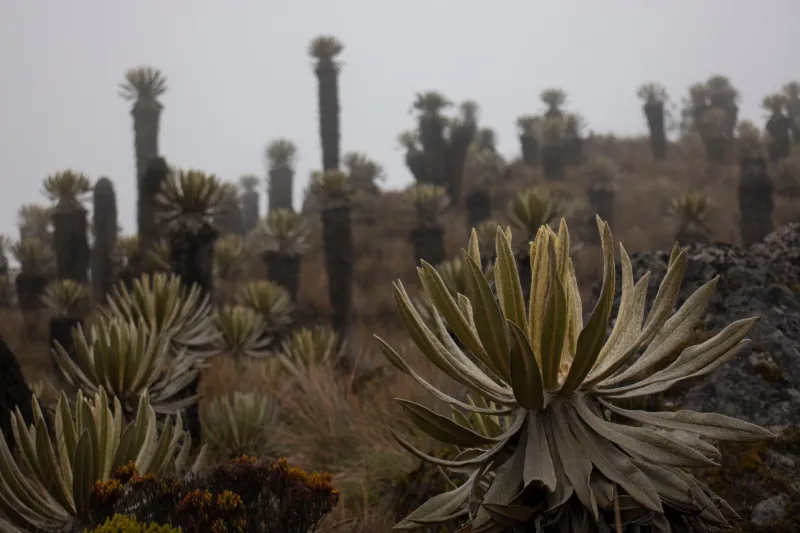
Elevation is perhaps the single most discussed variable in specialty coffee, and for good reason. Coffee plants grown at higher altitudes—generally above 4,500 feet above sea level—experience cooler temperatures that slow the maturation of the coffee cherry. This extended development period allows the fruit to accumulate greater concentrations of sugars, organic acids, and aromatic compounds. The result is a denser bean with a more complex, nuanced flavor profile: brighter acidity, more layered sweetness, and a clarity of cup that lower-grown coffees simply cannot achieve.
Colombia's coffee-growing regions illustrate this principle with particular elegance. In departments such as Huila and Nariño, farms perched between 5,500 and 7,000 feet produce beans celebrated for their vibrant malic and citric acidity—the same crisp brightness you might associate with a ripe green apple or a perfectly ripened plum. Descend to the lower flanks of those same mountains, and the cup becomes softer, earthier, and noticeably less complex. The difference is not the farmer's technique. It is geography.
In Kenya's Central Highlands, farms surrounding Mount Kenya at elevations exceeding 6,000 feet yield beans with the region's signature blackcurrant intensity and wine-like body—qualities that have made Kenyan AA a benchmark of excellence for specialty buyers worldwide. That distinctive character is, in large part, altitude's gift.
The Soil Beneath the Surface
Soil composition is less visible than a mountain's silhouette, but its influence on flavor is equally profound. Coffee plants absorb minerals and nutrients directly from the ground, and those elements find their way, in subtle but measurable ways, into the finished cup.
The volcanic soils of Ethiopia's Sidama and Guji zones are among the most storied in the coffee world. Rich in potassium, phosphorus, and trace minerals deposited over millennia by volcanic activity, these soils provide exceptional drainage while retaining just enough moisture to sustain the plant through dry periods. The resulting beans—often described as carrying notes of jasmine, bergamot, and stone fruit—reflect a mineral vibrancy that growers in other regions actively try to approximate, rarely with full success.
In Hawaii's Kona district, the volcanic slopes of Mauna Loa contribute a similarly mineral-forward foundation, though the flavor expression differs markedly: Kona coffees tend toward a silky body with gentle nuttiness and mild acidity, shaped as much by the island's unique weather rhythms as by the dark, porous volcanic earth itself.
Contrast these with the andosols—young, carbon-rich volcanic soils—found in Guatemala's Huehuetenango region, where exceptional drainage at high altitude combines with a mineral profile that contributes to the region's characteristic dark chocolate and brown sugar sweetness. Same volcanic origin story, entirely different flavor chapter.
Microclimate: The Invisible Hand
If altitude sets the stage and soil provides the foundation, microclimate is the director who determines how everything else performs. A microclimate is the localized set of atmospheric conditions—temperature ranges, humidity levels, cloud cover, wind patterns, and rainfall distribution—that governs a specific plot of land, sometimes differing meaningfully from the broader regional climate just a few miles away.
Ethiopia's Yirgacheffe sub-region is a masterclass in microclimate influence. Nestled within the larger Sidama zone, Yirgacheffe benefits from a specific combination of high-altitude fog, afternoon shade from surrounding forest canopy, and a bimodal rainfall pattern that allows for two distinct growing seasons. These conditions produce a floral, tea-like delicacy that is unmistakably Yirgacheffe—and that farmers in adjacent areas, working under slightly different microclimatic conditions, cannot fully replicate even with identical processing methods.
In Colombia, the term microclimate has taken on almost mythological status among specialty buyers. The country's dramatic topography—mountain ranges running north to south, with valleys channeling moisture from both the Pacific and Atlantic sides—creates a patchwork of hundreds of distinct growing environments within relatively short distances. A farm in the Cauca Valley may produce a cup with bright raspberry and hibiscus notes, while a neighbor just twenty miles away, on a slope facing a different direction with slightly different afternoon cloud cover, yields something rounder and more chocolatey. Both are Colombian. Both are extraordinary. Neither is the other.
Processing as a Bridge Between Land and Cup
It is worth acknowledging that terroir does not operate in isolation. The processing method—whether a bean is washed, naturally dried, or honey-processed—acts as a kind of interpretive lens through which the terroir expresses itself. A natural-processed Ethiopian bean, dried in its fruit for weeks under the highland sun, will foreground the berry-like sweetness latent in those volcanic soils. A washed version of the same cherry, its fruit mucilage removed before drying, will emphasize the floral clarity and citrus brightness that the altitude and microclimate contribute.
Neither approach is superior. Both are legitimate translations of the same underlying geography, and understanding both allows the discerning enthusiast to choose not just a region, but a perspective on that region.
Tasting Place in Every Cup
For those who have invested in quality beans and refined their brewing practice, the concept of terroir offers something genuinely rewarding: a reason to pay close attention. The lemon verbena note in your morning pour-over is not accidental—it is the expression of a specific elevation and a specific soil. The lingering cocoa finish in your afternoon espresso was shaped by rainfall patterns and mineral deposits laid down long before the farmer planted a single seedling.
At Fusion 20 Luxury Beans, we source with this understanding at the forefront of every decision. The beans we curate are chosen not merely for their roast quality or their processing excellence, but for the irreplaceable geographical character they carry from the land to your cup. When you brew with intention and sip with awareness, you are not simply drinking coffee. You are tasting a place—and that, we believe, is what makes a cup truly extraordinary.