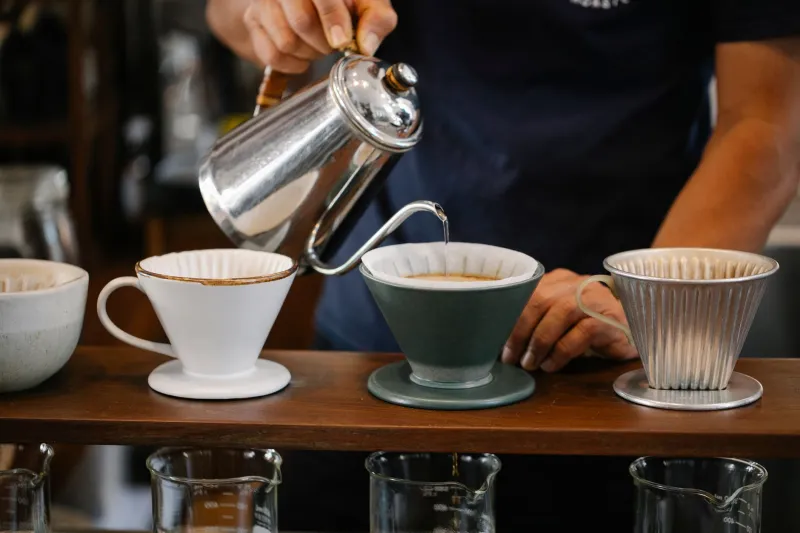
Beyond the Ordinary Cup: Twenty Coffee Beans So Rare, Most Enthusiasts Will Never Taste Them
There exists a category of coffee that transcends the morning ritual entirely. These are not the specialty single-origins found at your neighborhood roaster, nor the award-winning lots that appear briefly on subscription services. These are beans defined by scarcity, circumstance, and an almost unreasonable degree of refinement. At Fusion 20 Luxury Beans, rarity is not a marketing flourish—it is a standard. What follows is a considered survey of twenty coffees that represent the absolute frontier of what the cup can offer.
1. Kopi Luwak — Sumatra, Indonesia
Perhaps the most recognized name in rare coffee, Kopi Luwak is processed through the digestive system of the Asian palm civet, a small mammal native to Indonesian forests. Enzymes in the civet's gut alter the bean's protein structure, yielding a cup that is notably smooth, low in bitterness, and earthy in character. Authentic, ethically sourced Kopi Luwak commands between $100 and $600 per pound for US buyers. Provenance verification is essential, as counterfeit product is widespread.
2. Black Ivory Coffee — Northern Thailand
Produced in the Golden Triangle region, Black Ivory Coffee undergoes a process similar to Kopi Luwak but involves Asian elephants. The extended fermentation within the elephant's digestive tract—lasting approximately fifteen to thirty hours—imparts a naturally sweet, chocolate-forward profile with minimal bitterness. At roughly $500 to $1,000 per pound, it ranks among the world's most expensive coffees, with a portion of proceeds supporting elephant conservation.
3. Panama Geisha (Gesha) — Boquete, Panama
Originating from the Gesha village of Ethiopia before being cultivated to near-mythic status in Panama's Chiriquí highlands, the Geisha varietal has shattered auction records repeatedly. Its jasmine-like floral aromatics, bergamot citrus notes, and tea-like delicacy make it unmistakable. Top-tier lots from farms such as Hacienda La Esmeralda sell at auction for hundreds of dollars per pound, though curated retail offerings for US consumers typically begin around $60 to $150 per pound.
4. St. Helena Green Tipped Bourbon — Island of St. Helena
Grown on the remote South Atlantic island that served as Napoleon Bonaparte's final exile, this heirloom Bourbon varietal thrives in near-total isolation. The island's volcanic soil and consistent trade winds produce a bean with exceptional brightness, notes of caramel, and a silky body. Extremely limited export quantities make this one of the most geographically constrained coffees available, with US pricing generally ranging from $80 to $200 per pound.
5. Jamaican Blue Mountain — Blue Mountains, Jamaica
Protected by geographic indication, authentic Jamaican Blue Mountain coffee is grown at elevations between 3,000 and 5,500 feet in the misty peaks east of Kingston. Strict certification requirements govern every exportable lot. The cup is celebrated for its mild, clean sweetness, absence of bitterness, and notes of nuts and chocolate. Certified lots typically retail between $50 and $120 per pound in the United States.
6. Hawaiian Kona Extra Fancy — Big Island, Hawaii
The only commercially grown coffee produced entirely within the United States, Kona Extra Fancy represents the highest grade of Hawaii's celebrated harvest. Cultivated on the volcanic slopes of Mauna Loa and Hualalai, these beans offer bright acidity, medium body, and flavors that range from honey to macadamia nut. Authentic estate-grade Kona commands $40 to $80 per pound, though blends labeled loosely as "Kona" should be approached with caution.
7. Yemeni Mocha — Haraz and Bani Matar Regions, Yemen
Yemen holds a singular place in coffee history as the first country to cultivate coffee for commercial trade. Grown in ancient stone terraces at high altitude with minimal water, Yemeni beans develop an extraordinary complexity—wild berry notes, dried fruit, wine-like fermentation, and deep earthiness. Political instability has severely restricted supply, making authentic Yemeni Mocha one of the most difficult coffees to source legitimately. US pricing ranges from $80 to $300 per pound.
8. Ethiopian Yirgacheffe Natural Grade 1 — Gedeo Zone, Ethiopia
While Yirgacheffe coffees are relatively well-known, the highest-grade natural-process lots from certified single estates represent a distinct category of rarity. Blueberry, strawberry, and floral jasmine notes emerge from the extended dry-fermentation process. Reserve-grade G1 lots are allocated in small quantities to select importers, with retail pricing in the US typically between $25 and $70 per pound for verified estate lots.
9. Finca El Injerto Pacamara — Huehuetenango, Guatemala
El Injerto is one of Guatemala's most decorated farms, and its Pacamara varietal—a cross between Pacas and Maragogipe—produces exceptionally large beans with a layered flavor profile: stone fruit, dark chocolate, and bright citrus acidity. Micro-lot releases sell out rapidly and are rarely available outside specialty importers. US buyers can expect to pay $50 to $120 per pound for authenticated lots.
10. Sumatra Mandheling Grade 1 — North Sumatra, Indonesia
Processed through the distinctive wet-hulled method known locally as Giling Basah, top-grade Mandheling beans develop a full body, low acidity, and a complex earthiness layered with cedar, dark chocolate, and herbaceous notes. Grade 1 certified lots from select co-operatives are increasingly difficult to procure as demand consistently outpaces supply. US pricing ranges from $25 to $60 per pound.
11. Esmeralda Especial Auction Lot — Chiriquí, Panama
Distinct from standard Geisha offerings, the Esmeralda Especial auction lots are released once annually and represent the finest micro-selections from Hacienda La Esmeralda. These lots have set world records exceeding $1,000 per pound at auction. Access for private US buyers is extraordinarily limited and typically requires direct relationships with the farm or its authorized distributors.
12. Fazenda Santa Inês Yellow Bourbon — Minas Gerais, Brazil
Brazil is rarely associated with ultra-premium coffee, which makes Santa Inês all the more remarkable. This Yellow Bourbon estate produces a naturally processed coffee of extraordinary sweetness—notes of brown sugar, tropical fruit, and milk chocolate—that has placed consistently at the top of Cup of Excellence competitions. US retail pricing for authenticated lots sits between $40 and $90 per pound.
13. Wush Wush — Cauca, Colombia and Ethiopia
Wush Wush is a rare heirloom varietal of Ethiopian origin that has found renewed expression in Colombia's high-altitude Cauca region. Characterized by vibrant florality, passion fruit acidity, and a delicate sweetness reminiscent of hibiscus tea, it is produced in extremely limited quantities by a handful of progressive Colombian farms. US buyers typically encounter pricing between $45 and $100 per pound.
14. Liberica — Benguet Province, Philippines
Liberica (Coffea liberica) is one of the rarest commercially produced coffee species, representing less than two percent of global production. Its large, irregular beans produce a bold, full-bodied cup with smoky, woody, and floral notes that are entirely unlike Arabica or Robusta. Authentic Philippine Liberica—known locally as Kapeng Barako—is seldom exported and commands significant premiums when available to US consumers, typically $50 to $150 per pound.
15. Bourbon Pointu (Laurina) — Réunion Island
Once thought extinct, the Bourbon Pointu varietal was revived through conservation efforts on the French island of Réunion in the Indian Ocean. Naturally low in caffeine, it produces a cup of exceptional delicacy—soft citrus, floral honey, and a remarkably clean finish. Annual production is measured in dozens of kilograms, and authenticated lots reaching US buyers are extraordinarily rare, with pricing frequently exceeding $200 per pound.
16. Sulawesi Toraja Sapan — South Sulawesi, Indonesia
From the mountainous Toraja highlands of Sulawesi, this wet-hulled coffee offers a distinctive profile of dark fruit, clove, and bittersweet chocolate with a syrupy body. The Sapan designation refers to a specific sub-region where elevation and soil conditions intensify the cup's complexity. Limited export infrastructure restricts availability, with US pricing generally between $30 and $65 per pound for verified lots.
17. Timor-Leste Ermera — Ermera District, Timor-Leste
One of the world's least-known coffee origins, Timor-Leste produces shade-grown Arabica at high altitude with virtually no chemical inputs. The Ermera district's volcanic terroir yields a cup with earthy depth, dried fruit sweetness, and a lingering spice finish. The nascent export infrastructure means supply to US buyers remains extremely constrained, with pricing between $25 and $55 per pound when available.
18. Kona Peaberry — Big Island, Hawaii
Distinct from standard Kona, peaberry beans form when only one seed develops inside the coffee cherry rather than two. The resulting bean is rounder, denser, and believed by many experts to concentrate flavor more intensely. Kona Peaberry represents a small fraction of each year's harvest and commands a premium over standard Kona grades, typically $60 to $100 per pound from certified estates.
19. Ethiopian Harrar Longberry Grade 1 — Harari Region, Ethiopia
Harrar coffees are among Ethiopia's most storied exports, and the Longberry Grade 1 designation identifies the largest, most carefully sorted beans from this wild-grown region. Dry-processed on raised beds, these beans develop an intense blueberry and wine character with a heavy, almost syrupy body. Authentic G1 lots are allocated in small quantities and retail between $30 and $75 per pound in the US.
20. Geisha Village Ethiopia — Bench Sheko Zone, Ethiopia
This is the ancestral homeland of the Gesha varietal before its migration to Panama. Grown at elevations exceeding 2,000 meters in near-wilderness conditions, Ethiopian Gesha Village coffees offer a raw, untamed complexity—bergamot, jasmine, stone fruit, and a savory mineral finish—that many connoisseurs consider superior even to its celebrated Panamanian counterpart. Micro-lot allocations sell out within hours of release, with US pricing between $80 and $200 per pound.
Pursuing the Rare with Intention
The coffees documented here are not merely products—they are arguments for a different relationship with the cup. Each one represents a convergence of geography, agricultural practice, and patient craft that cannot be replicated at scale. At Fusion 20 Luxury Beans, the pursuit of rarity is pursued with equal measures of rigor and reverence. The extraordinary moment begins not when the coffee is poured, but when the decision to seek something genuinely exceptional is made.