Scarcity as Currency: How Limited-Batch Bean Collaborations Are Redefining Luxury Coffee
There is a particular kind of anticipation that arrives in the inbox of a dedicated specialty coffee enthusiast: a brief, elegantly worded announcement that a new collaboration release is imminent, quantities are finite, and access is reserved for those who act with intention. Within hours, the allocation is gone. The beans have not yet been roasted. The experience has not yet been tasted. And yet, the transaction feels entirely justified.
This is the architecture of modern luxury coffee—and it is being built, batch by batch, through the art of the intentional collaboration.
The Anatomy of a Meaningful Partnership
Not every limited release deserves the designation of a true collaboration. The market has seen its share of co-branded packaging dressed up as creative partnership, and discerning buyers are increasingly capable of distinguishing between genuine curation and strategic marketing theater.
A meaningful collaboration in the premium bean space typically involves at least two distinct creative intelligences contributing something irreplaceable to the final product. Consider the model that has emerged between specialty roasters and internationally recognized culinary figures: a renowned pastry chef might work directly with a roaster to develop a processing protocol—perhaps an extended anaerobic fermentation that mirrors the flavor logic of a particular confection—resulting in a bean that could not have existed without both parties at the table. The coffee becomes, in effect, a culinary artifact.
Similarly, partnerships between American specialty roasters and international micro-lot producers have produced releases in which the producer's generational expertise in a specific varietal is combined with a roaster's precision profiling techniques. The result is not simply a bag of imported beans. It is a document of two philosophies meeting in a single cup.
The Psychology of Scarcity in the Premium Market
Luxury economists have long understood that perceived value is not purely a function of intrinsic quality. Scarcity, provenance, and narrative are equally powerful contributors to what a consumer believes something is worth—and what they are willing to pay.
The premium coffee market has absorbed this lesson with remarkable sophistication. When a roaster announces a collaboration lot of, say, two hundred pounds sourced from a single tree-lot in Yirgacheffe, the numerical constraint is not incidental. It is load-bearing. The limitation transforms the product from a beverage ingredient into something closer to a collectible: finite, time-stamped, and unrepeatable.
Consumer psychology research suggests that scarcity activates what behavioral economists call the "reactance response"—the instinct to assign greater value to something precisely because access to it is being restricted. In the luxury coffee context, this manifests as a willingness to pay premiums that would seem irrational for a commodity product but feel entirely proportionate for something positioned as an event.
Critically, however, the psychology only holds when the underlying quality substantiates the narrative. Enthusiasts who have paid a premium for a collaboration release and found it underwhelming do not return. The scarcity framework is powerful, but it is not forgiving.
Case Studies Worth Examining
Several partnerships in recent years have demonstrated what a well-executed collaboration can achieve—both commercially and culturally.
One notable model involves American specialty roasters partnering with Japanese fermentation specialists to develop post-harvest processing techniques that impart umami-adjacent complexity to naturals and washed lots. These releases have commanded prices typically associated with aged spirits, and they have sold out consistently—not because of the price point, but because the sensory result genuinely surprised experienced tasters.
Another compelling format is the chef-driven blend: a culinary figure with a specific flavor vision commissions a roaster to source and develop beans that complement a signature dish or tasting menu. The collaboration is announced in tandem with a dining experience, creating a dual-channel moment of consumption that extends the story of the bean beyond the cup. For American food enthusiasts who already navigate the intersection of fine dining and artisanal products, this format resonates with particular clarity.
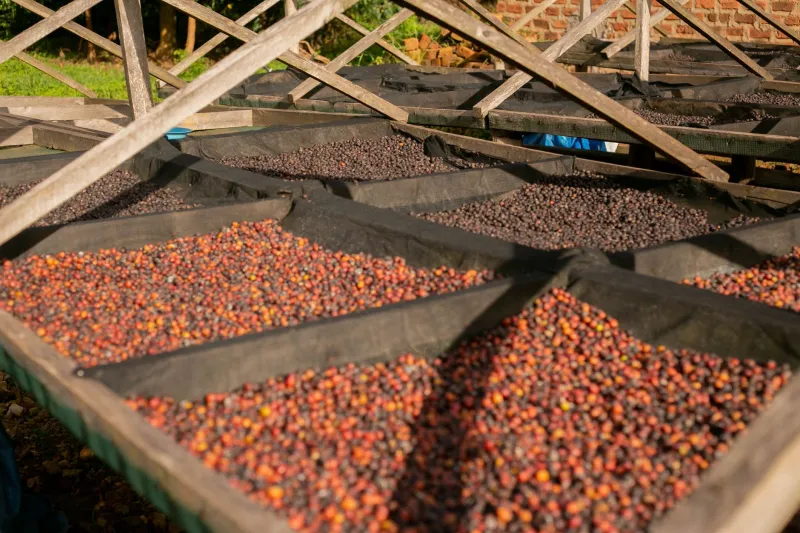
Perhaps most interesting is the emergence of producer-led collaborations, in which a farming family in Colombia or Rwanda partners directly with an American roaster to co-develop a varietal experiment—planting, processing, and profiling together across multiple harvests. These releases carry a different kind of weight: they are not just limited, they are longitudinal. Buying into the first release means participating in an ongoing story.
What Makes a Collaboration Worth the Price Tag
For the buyer considering whether a collaborative release justifies its premium, several evaluative criteria are worth applying.
First, transparency of contribution: can both parties articulate specifically what each brought to the product? Vague language about "shared vision" is a warning sign. Precise language about varietal selection, fermentation duration, roast curve development, or flavor target is a sign of genuine creative investment.
Second, traceability of the source material: does the collaboration begin at origin, or does it begin at the roastery? Partnerships that extend into the farming and processing stages carry a depth of influence—and therefore a depth of distinction—that purely post-harvest collaborations cannot replicate.
Third, the coherence of the sensory result: does the cup taste like the product of two distinct intelligences working in concert, or does it taste like a standard single-origin with a notable name attached? The former justifies the investment. The latter does not.
The Broader Implication for Specialty Coffee Culture
The rise of the collaborative release is doing something more significant than generating excitement around individual products. It is reshaping the vocabulary of value in specialty coffee.
For decades, the premium coffee market defined quality primarily through origin specificity and processing method. These remain foundational. But the collaboration model introduces authorship as an additional dimension of value—the idea that a coffee can be attributed not just to a place and a process, but to a creative act performed by identifiable individuals with distinct perspectives.
This is the language of fine art, of haute cuisine, of limited-edition watchmaking. It is the language of luxury in its most refined and durable form.
At Fusion 20 Luxury Beans, we believe that the most compelling cup is always the product of intention—of choices made carefully, partnerships formed deliberately, and flavors pursued with genuine curiosity. The limited-batch collaboration, at its best, is the fullest expression of that belief.