The Collector's Blueprint: Curating a Rotating Luxury Coffee Portfolio That Rewards Every Sip
There is a particular kind of pleasure reserved for those who approach coffee not as a habit but as a discipline. The collector who opens a drawer to find four distinct single-origins from three different continents—each at a different stage of its post-roast development, each waiting its turn—understands something that casual drinkers rarely discover: a great coffee collection is not static. It breathes, rotates, and teaches.
Building such a collection requires intention. It demands knowledge of origin, processing method, and roast trajectory. It calls for a storage philosophy and a sequencing strategy. Above all, it rewards patience. What follows is a framework designed to help the serious enthusiast construct a luxury coffee portfolio that does not merely impress guests but genuinely improves with every thoughtful addition.
Start With a Foundation of Contrast, Not Repetition
The most common mistake among new collectors is gravitating toward a single flavor profile they already love—perhaps the bright, citrus-forward notes of an Ethiopian natural—and simply acquiring more of the same. This approach, however well-intentioned, leads to palate fatigue faster than almost any other.
A foundational collection should be built on contrast. Consider anchoring your portfolio across four distinct axes:
- Origin diversity: Represent at least three distinct growing regions. East Africa (Ethiopia, Kenya, Rwanda), Central America (Guatemala, Panama, Costa Rica), South America (Colombia, Peru, Bolivia), and Asia-Pacific (Yemen, Indonesia, Papua New Guinea) each offer genuinely different flavor languages.
- Processing method variety: Natural, washed, honey-processed, and anaerobic fermentation each produce dramatically different sensory experiences from the same species. A washed Kenyan and a natural Ethiopian are as different as a Burgundy and a Barolo.
- Roast range: Maintain at least one light-roast, one medium-roast, and one medium-dark expression in your collection simultaneously. This allows you to observe how roast level transforms the same underlying terroir.
- Rarity tier: Not every bean in your collection needs to be a Geisha or a Wush Wush. Include a mix of celebrated rarities and emerging micro-lots. The latter often surprise at a fraction of the cost.
Treat Your Collection as a Portfolio, Not a Pantry
The language of investment is useful here—not because coffee is a financial asset, but because the mental framework it implies leads to better decisions. A pantry is restocked when it runs low. A portfolio is actively managed.
This means tracking what you have, what is running out, and—critically—what is conspicuously absent. Keep a simple log, even a handwritten one, noting the origin, producer, processing method, roast date, and your tasting notes for each selection. Over time, this record becomes invaluable. You will begin to notice patterns in your preferences, gaps in your geographic coverage, and seasonal shifts in what your palate craves.
Portfolio thinking also means acquiring strategically. When a rare micro-lot from a Panamanian estate becomes available—perhaps a limited Geisha from a farm that produces only a few hundred pounds annually—the collector who has been tracking their portfolio knows immediately whether it complements or duplicates what they already hold.
Master the Art of Sequencing
How you move through your collection matters as much as what is in it. Palate sequencing—the order in which you experience different coffees across days and weeks—has a profound effect on what you actually taste.
A practical principle: move from delicate to bold, not the reverse. Begin a week with a lightly roasted, washed Ethiopian Yirgacheffe, where florality and stone fruit are the primary conversation. Midweek, transition to a honey-processed Costa Rican that introduces more body and sweetness. End the week with a naturally processed Sumatran or a well-developed Colombian that delivers richness and depth. This arc trains the palate to appreciate nuance rather than simply chasing intensity.
Similarly, resist the temptation to open multiple bags simultaneously. Coffee, once opened, begins its degassing process and gradual oxidation. A single bag consumed with focus and attention over seven to ten days yields far more insight—and more pleasure—than three partially open bags competing for your attention.
Storage Is Not an Afterthought
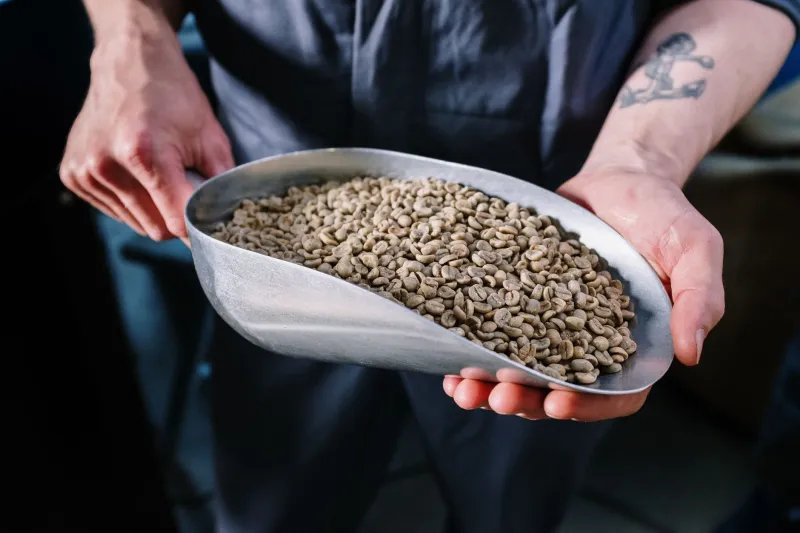
For a collection to improve over time, the beans within it must be protected. Green coffee, when stored correctly, can remain stable for a year or longer. Roasted coffee, by contrast, is at its expressive peak between three and twenty-one days post-roast, depending on the variety and roast level—though many premium naturals continue to evolve interestingly for up to six weeks.
The core principles of proper storage are straightforward but non-negotiable:
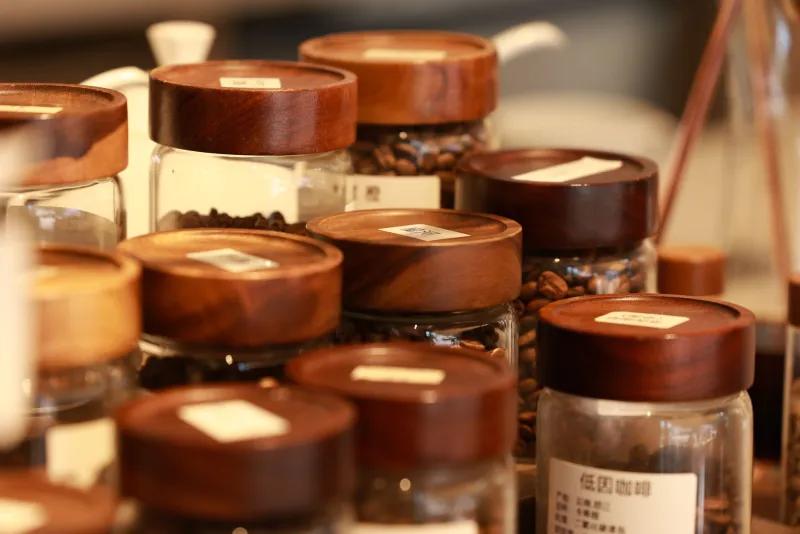
- Airtight containment: Invest in quality, airtight storage vessels with one-way CO₂ valves. These allow degassing without admitting oxygen.
- Temperature stability: Store at consistent room temperature, away from heat sources. Refrigeration is debated among experts, but if you pursue it, ensure beans are in a truly airtight container to prevent moisture absorption.
- Light protection: UV exposure degrades aromatic compounds rapidly. Opaque or UV-protective containers are essential for any collection maintained for more than a few days.
- Separation: Do not store different origins in the same vessel. Cross-contamination of aromatics is subtle but real, and it undermines the very distinctiveness you are trying to preserve.
Prevent Palate Fatigue Through Intentional Breaks
Even the most devoted collector benefits from periodic palate resets. If you find that your morning cup has begun to feel less revelatory, the issue is rarely the coffee—it is almost always sensory habituation.
Two strategies work particularly well. The first is a brief, deliberate interlude with something radically different: a high-quality green tea, a carefully prepared pour-over of an origin you rarely visit, or even a day without coffee entirely. The second is re-engaging with a bean you have not tasted in several months. Returning to a familiar origin after a significant absence is often a revelation; you taste it as if for the first time.
The Collection as a Living Practice
The most rewarding luxury coffee collection is never truly finished. It is a living practice—one that reflects the collector's evolving palate, the seasonal availability of exceptional micro-lots, and the ongoing discoveries made through careful, attentive tasting.
At Fusion 20 Luxury Beans, we believe the collection is not the destination. It is the vehicle. Each new acquisition, each deliberate sequencing decision, each properly stored and thoughtfully opened bag is an investment not in beans but in the rare and deeply personal art of sensory refinement. Built with intention, a rotating portfolio of exceptional coffees does not simply get consumed. It gets better—and so does the person who tends it.