The Price of Principle: Reckoning Honestly With What Ethical Coffee Actually Costs
There is a comfortable story that the specialty coffee industry has told itself—and its customers—for the better part of two decades. It goes something like this: pay more for better beans, and the additional margin flows back through the supply chain, rewarding the farmers and workers whose labor made the quality possible. It is a story with genuine moral appeal. It is also, in important respects, incomplete.
The tension between ethical sourcing and premium pricing is not a new problem. But as the luxury coffee market matures, as consumers grow more sophisticated, and as the environmental and social stakes of global agriculture become more visible, the industry faces a reckoning that cannot be deferred indefinitely.
What Fair Trade Actually Guarantees—and What It Does Not
Fair Trade certification, the most widely recognized ethical sourcing designation in the American market, establishes a floor price for coffee that is intended to protect producers from the volatility of commodity markets. When the C-market price drops below the Fair Trade minimum, certified buyers are required to pay the floor. This is a meaningful protection, and it has provided genuine stability to farming cooperatives in vulnerable regions.
However, the Fair Trade model has well-documented limitations. The certification applies to cooperatives, not individual farmers, which means the distribution of premium payments within a farming community is subject to the cooperative's internal governance—a variable that the certification itself does not audit. Additionally, the Fair Trade floor price, while protective during market downturns, does not automatically reflect the actual cost of production in high-cost growing environments. A farmer in Hawaii or Jamaica, where land, labor, and regulatory costs are substantially higher than in East Africa or Central America, may find that even the Fair Trade premium leaves them operating at a marginal loss.
For the luxury coffee consumer who has assumed that the Fair Trade logo on a bag represents a comprehensive ethical guarantee, this is an uncomfortable clarification. It does not mean the certification is without value. It means the certification is a beginning, not a conclusion.
Direct Trade and the Illusion of Transparency
In response to the perceived inadequacies of third-party certification, many specialty roasters—particularly those operating in the premium and ultra-premium segments—have adopted direct-trade sourcing models. The premise is straightforward: by eliminating intermediaries and establishing direct purchasing relationships with individual farms or cooperatives, roasters can pay higher prices, exercise greater quality control, and develop more accountable partnerships.
The direct-trade model has produced genuinely impressive results in numerous cases. Long-term relationships between American roasters and specific farming families in Colombia, Ethiopia, and Guatemala have funded infrastructure improvements, funded education for farmers' children, and enabled the kind of experimental processing work that produces the distinctive lots that define the luxury end of the market.
But the term "direct trade" is unregulated. Unlike Fair Trade, it carries no certification standard, no third-party audit, and no minimum price requirement. A roaster can describe its sourcing as direct trade on the basis of a single purchasing visit to an origin country. The consumer, reading that language on a retail bag, has no mechanism for distinguishing a deeply committed, multi-year farming partnership from a one-time transaction with a well-photographed producer.
This opacity is a structural problem, and it is one that the luxury coffee market has been slow to address with the transparency it routinely demands in other dimensions of product quality.
The True Cost of Regenerative Farming
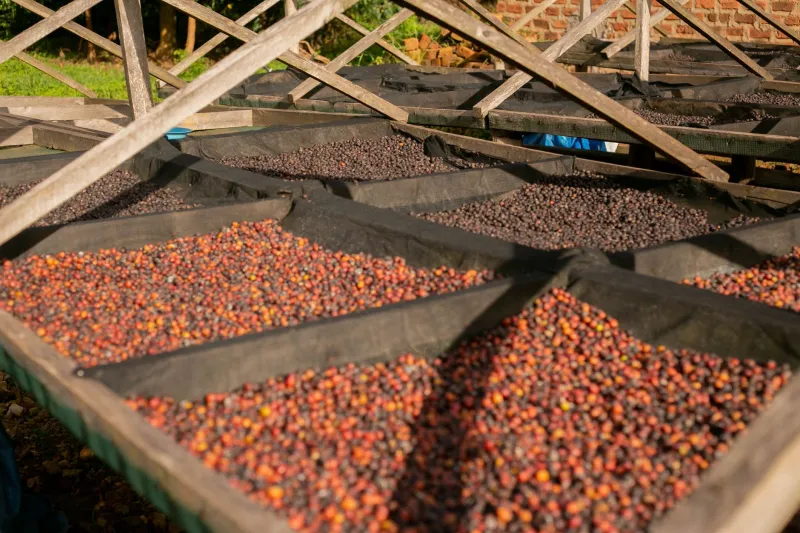
Perhaps the most consequential—and least-discussed—dimension of ethical sourcing economics involves the emerging category of regenerative agriculture. Regenerative farming practices—shade-growing, composting, reduced chemical inputs, soil carbon sequestration, watershed protection—represent a meaningful upgrade over even well-managed conventional specialty coffee production. They also cost substantially more to implement and maintain.
A farm transitioning from conventional to regenerative practices faces years of reduced yields during the transition period, significant upfront investment in infrastructure and training, and the ongoing labor costs of more intensive land stewardship. These costs do not disappear because a roaster is committed to paying a premium. They require a premium large enough to actually cover them—and in many cases, the premiums currently paid in the specialty market, even at the luxury tier, fall short of that threshold.
The regenerative premium, honestly calculated, often exceeds what the market has been conditioned to accept as reasonable. This is not a failure of consumer values. It is a failure of market education. American specialty coffee buyers who readily pay forty or fifty dollars for a hundred-gram lot of a competition-winning natural process have not always been given the information they need to understand that the regenerative farming practices that produced that lot may have cost the farmer more than the premium covered.
A Genuine Luxury Obligation
This analysis is not an argument against ethical sourcing. It is an argument for ethical sourcing that is honest about its economics.
The luxury coffee market occupies a particular position of responsibility in this conversation. Consumers who are willing to pay premium prices for exceptional beans are, almost by definition, less price-sensitive than the broader coffee-buying public. They have already accepted the premise that quality costs more. They are the segment of the market most capable of absorbing the genuine cost of ethical production—if that cost is explained clearly and justified credibly.
This suggests that the most principled position available to a luxury coffee retailer is not to offer ethical sourcing as a marketing feature but to treat it as a structural commitment: to pay prices that genuinely reflect the cost of sustainable, equitable farming; to publish that pricing transparently; and to hold itself accountable to the same standards of traceability it applies to flavor profiles and roast development.
It also suggests an obligation to the consumer: to resist the temptation to make ethical sourcing feel affordable when it is not, and to trust that a buyer who values genuine luxury is also capable of valuing genuine principle.
What the Market Must Decide
The central question this analysis raises is not whether ethical coffee should be expensive. It already is. The question is whether the expense is being distributed honestly—whether the premium the consumer pays is reaching the people and practices it is intended to support, in proportions that actually make a difference.
The answer, today, is inconsistent. Some roasters are doing this work with extraordinary integrity. Others are leveraging ethical language to justify pricing without delivering commensurate supply-chain accountability.
For the discerning buyer, the task is the same one that applies to every dimension of premium coffee selection: ask harder questions, demand more specific answers, and reserve genuine loyalty for the producers and roasters who have earned it through demonstrated, documented commitment.
At Fusion 20 Luxury Beans, we hold that the pursuit of the extraordinary cup is inseparable from the pursuit of an extraordinary supply chain. Rare beans refined to their highest expression are only worthy of that designation when the people who grew them were treated with the dignity that excellence demands.