The Mind in the Cup: What Neuroscience Reveals About Why Luxury Coffee Tastes the Way It Does

Photo: Smuconlaw., CC BY-SA 3.0, via Wikimedia Commons
The Paradox of the Premium Cup
Consider the following scenario, which researchers have replicated in various forms across the fields of consumer psychology and sensory neuroscience: two identical cups of coffee are presented to a subject. One is described as a rare, single-origin microlot from a celebrated Rwandan estate, priced at forty dollars per two-ounce serving. The other is described as a commercial blend available at any neighborhood grocery. The subject, tasting both without visual access to the cups, consistently rates the first as superior—more complex, more refined, more pleasurable.
The cups, in these experiments, are often identical.
This is not evidence that luxury coffee consumers are gullible. It is evidence that the human brain does not process taste as an isolated sensory event. It processes taste as an integrated experience—one in which price, context, narrative, ritual, and expectation participate as actively as the chemical compounds actually present in the beverage. For the serious coffee enthusiast, this insight is not deflating. It is, properly understood, one of the most fascinating dimensions of the premium coffee experience.
Price as a Flavor Compound
The phenomenon known as price anchoring—the tendency for consumers to use price as a proxy for quality—has been documented extensively in the wine literature, most famously in a 2008 study by researchers at the California Institute of Technology. Using functional MRI imaging, the study demonstrated that subjects reported greater pleasure from wine they believed to be expensive, and that this subjective report was accompanied by measurably increased activity in the medial orbitofrontal cortex, the brain region associated with experienced pleasantness.
The implication is remarkable: the brain does not merely believe that expensive wine tastes better. It actually experiences it as tasting better, at the neurological level. The pleasure is genuine; the mechanism producing it is partly cognitive rather than purely gustatory.
The same principle applies with considerable force to specialty coffee. When a consumer is informed that a particular bean was harvested from a single estate in Panama's Chiriquí province, that fewer than three hundred pounds were produced in a given year, and that the lot received a score of ninety-four points from a panel of certified Q Graders, they approach the cup with a set of expectations that the brain is already preparing to fulfill. The flavor compounds in the coffee—the jasmine, the bergamot, the peach—are real. But the intensity with which they are perceived, and the pleasure they generate, is substantially amplified by the cognitive frame surrounding them.
The Ritual as Sensory Architecture
Beyond price, the rituals associated with premium coffee consumption perform a specific and well-documented neurological function: they direct attention. Attention, it turns out, is not merely a prerequisite for sensory experience—it is a determinant of sensory intensity. Research in perceptual psychology has established that the same stimulus, presented with and without attentional priming, produces measurably different sensory reports.
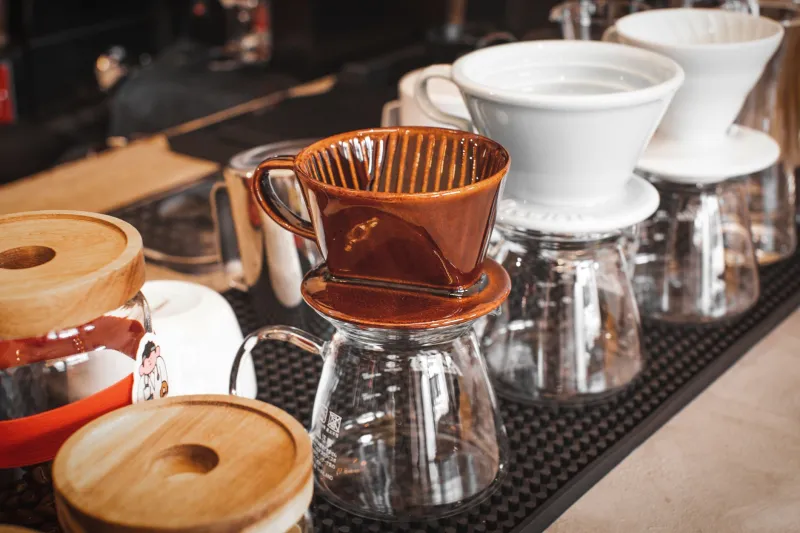
The deliberate rituals of specialty coffee preparation—the careful measurement of grounds, the controlled pour of a gooseneck kettle, the precise timing of a bloom phase, the selection of a vessel appropriate to the bean's character—are not merely aesthetic affectations. They are attentional practices. They train the drinker's focus on the sensory experience that is about to unfold, heightening the sensitivity with which each flavor note is registered.
At Fusion 20 Luxury Beans, we have long held that the ritual of preparation is inseparable from the quality of the cup. Neuroscience now provides a mechanistic explanation for why this is so. The brain that has been prepared, through deliberate ritual, to receive an extraordinary sensory experience is neurologically different from the brain that encounters the same beverage casually. It is more attentive, more discriminating, and more capable of registering the subtle complexity that distinguishes a truly exceptional coffee from a merely adequate one.
Expectation, Disappointment, and the Honest Palate
The same mechanisms that elevate the perceived quality of premium coffee can, of course, operate in reverse. A consumer who approaches an expensive bean with expectations that the coffee itself cannot meet will experience a form of cognitive dissonance that the brain resolves, typically, by downgrading the sensory experience—perceiving the flavors as less distinct, the finish as less enduring, the overall impression as somehow flat. This is why the relationship between genuine quality and perceived quality in the luxury coffee market is not simply one of enhancement; it is one of mutual dependency.
Honest connoisseurship requires an awareness of this dynamic. The collector who has paid a significant sum for a celebrated lot, and who has read effusive descriptions of its flavor profile, is not approaching the cupping in a state of perceptual neutrality. They are approaching it with a complex set of expectations that will actively shape what they taste. The discipline of blind cupping—evaluating coffees without prior knowledge of their identity or price—is, in part, an attempt to recover some measure of that neutrality. It is an imperfect corrective, but a valuable one.
The Multi-Sensory Architecture of Luxury
Contemporary sensory science has established that taste is fundamentally a multi-modal experience. The color of a cup influences perceived sweetness. The weight of a mug affects the perceived quality of its contents. Ambient sound—the quiet of a dedicated tasting room versus the noise of a busy café—measurably alters flavor perception. Even the typography and visual design of packaging have been shown to influence how the coffee inside is experienced.
This body of research has profound implications for how luxury coffee should be presented, served, and consumed. It suggests that the investment in premium ceramics, in the aesthetics of a cupping space, in the quality of water used for preparation, and in the elimination of competing sensory distractions is not mere indulgence. It is the construction of an optimal perceptual environment—one in which the extraordinary qualities of an exceptional bean have the best possible chance of being fully perceived.
Perception Is Not Deception
It would be a misreading of this science to conclude that the pleasures of luxury coffee are illusory, or that the premium paid for exceptional beans is therefore unjustified. The neuroscientific evidence does not suggest that perception is separate from reality; it suggests that perception is a component of reality. The pleasure experienced in a cup of carefully sourced, expertly roasted, ritually prepared specialty coffee is genuine pleasure—neurologically real, subjectively meaningful, and entirely worth pursuing.
What this science offers the serious coffee enthusiast is not disenchantment but a more complete understanding of what they are actually experiencing. The bean contributes its chemistry. The roaster contributes their craft. The brewer contributes their technique. And the drinker contributes their attention, their knowledge, their expectations, and the full architecture of their perceptual apparatus. The extraordinary cup is a collaboration between all of these elements. The mind, it turns out, is not the least important ingredient.