Mastering the Flame: Why America's Most Devoted Coffee Enthusiasts Are Roasting Their Own Rare Beans
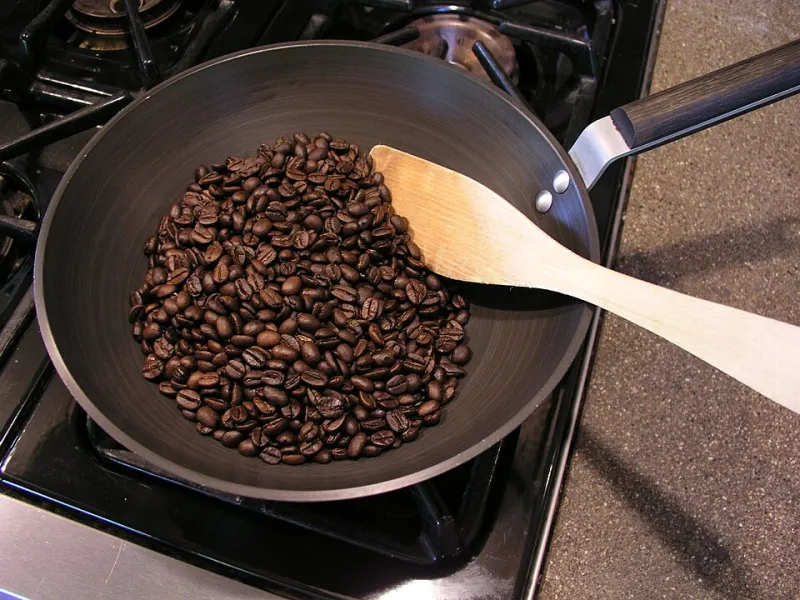
Photo: Dan Bollinger, CC BY-SA 3.0, via Wikimedia Commons
The Final Frontier of Coffee Curation
For years, the most ardent specialty coffee devotees pursued excellence through acquisition—sourcing single-origin lots from remote Ethiopian highlands, bidding on microlot auctions, and commissioning private roasts from celebrated artisan roasters. Yet a growing cohort of American coffee enthusiasts has concluded that even the finest third-party roast represents a form of creative compromise. If the bean is the raw material and the brew is the finished expression, then the roast is the transformative act that determines everything in between. Increasingly, they want that act to belong to them.
Home roasting—once the province of hobbyists working with popcorn poppers and cast-iron pans—has matured into a sophisticated, equipment-intensive discipline that commands serious investment and rewards serious study. For the luxury consumer who already curates rare green beans with the deliberateness of a fine wine collector, mastering the roast is the logical and inevitable next step.
The Equipment That Makes Mastery Possible
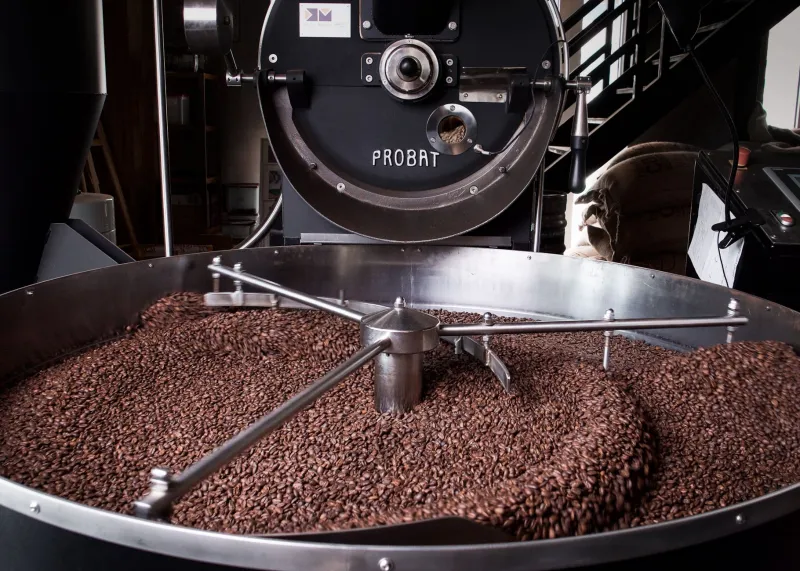
The transformation of home roasting from a niche curiosity into a genuine luxury practice has been driven, in no small part, by a new generation of precision roasting instruments. Machines such as the Ikawa Pro, the Mill City Roasters tabletop drum roaster, and the Kaffelogic Nano 7 offer temperature profiling, airflow control, and data logging capabilities that were, until recently, confined to commercial operations.
These are not appliances one purchases casually. Entry-level precision roasters begin in the range of several hundred dollars; serious machines designed for nuanced profile development can exceed two thousand. The investment, however, is commensurate with the control they provide. A roaster equipped with real-time bean temperature monitoring and programmable development time ratios can replicate a beloved profile with extraordinary consistency—or deviate from it deliberately, exploring how a single degree of additional first-crack development transforms a Panama Gesha's jasmine top notes into something altogether richer and more complex.
Beyond the roaster itself, the committed home enthusiast invests in precision scales accurate to the tenth of a gram, dedicated cooling trays, chaff collection systems, and—critically—cupping sets that allow for immediate sensory evaluation of each roast. The kitchen, in such households, is less a place of casual cooking than a laboratory of continuous refinement.
The Green Bean as Raw Material
The home roasting movement has given rise to a parallel market: the premium green bean trade. Importers and specialty suppliers such as Sweet Maria's, Genuine Origin, and a growing number of direct-trade operations now make extraordinary unroasted lots accessible to private buyers. For the collector accustomed to paying a premium for finished roasted coffee, the economics of green bean purchasing represent a compelling proposition—exceptional microlots available at a fraction of the roasted price, with the added dimension of personal creative control.
At Fusion 20 Luxury Beans, we have observed this trend with considerable interest. The green bean is, in its unroasted state, a study in latent potential. A washed Yirgacheffe lot, pale and grassy in its raw form, conceals within it the bright citrus and bergamot florals that will only emerge under careful application of heat. A naturally processed Sidama harbors stone fruit and wine-like fermentation notes that the roaster can choose to emphasize or moderate depending on how aggressively the development phase is managed. The green bean, in other words, is not a finished product—it is a conversation waiting to begin.
The Technical Language of the Roast
To engage seriously with home roasting is to acquire a new vocabulary. Terms such as Maillard reaction, first crack, rate of rise, and development time ratio move from abstract coffee jargon into lived, sensory experience. The Maillard reaction—the same chemical process responsible for the browning of a perfectly seared steak—begins transforming the bean's sugars and amino acids into the hundreds of aromatic compounds that constitute coffee's flavor complexity. First crack, the audible moment when expanding gases rupture the bean's cellular structure, marks the threshold between underdevelopment and the beginning of the roaster's most consequential decisions.
How long one lingers after first crack—and at what temperature, and with what airflow—determines whether a Guatemalan Huehuetenango presents as a bright, tea-like light roast or a more rounded, caramel-inflected medium. The mastery lies in understanding not merely what these variables do in theory, but what they do to a specific bean from a specific harvest on a specific day. Green beans absorb ambient humidity; they vary in density by origin and altitude; they respond differently to different roasting machines. The serious home roaster keeps meticulous logs, cups every batch with discipline, and adjusts with each iteration.
Personalization as the Ultimate Luxury
What distinguishes home roasting from every other form of coffee refinement is the absolute degree of personalization it enables. The finest commercial roaster, however talented, is producing for a market—calibrating to a flavor profile that satisfies a broad audience of discerning palates. The home roaster answers to no one but themselves.
This means that one can roast a Kenyan AA to precisely the development level that flatters one's preferred brewing method—perhaps a slightly longer development for a French press preparation, coaxing more body and chocolate depth from a bean that, at a lighter roast, might reward a pour-over with its more delicate fruit acidity. It means that a household with two coffee drinkers of divergent preferences can produce, from a single green lot, two entirely different cups—each optimized for the individual who will drink it.
This is not indulgence for its own sake. It is the application of knowledge, equipment, and intention to the creation of something genuinely singular. In a world where luxury increasingly means the bespoke and the unrepeatable, the home roaster is producing something that no commercial operation can replicate: a cup made exactly for them, by them, from a bean they selected, at a roast level they determined, consumed at a freshness that no retail supply chain can match.
The Discipline Behind the Pleasure
It would be misleading to suggest that home roasting is without its demands. The learning curve is genuine. Early batches will disappoint; some will be discarded entirely. Smoke management, particularly in urban apartments, requires thoughtful planning. The time investment—from green bean selection through roasting, resting, and cupping—is not trivial.
But for the coffee enthusiast who has already committed to treating the cup as a serious pursuit, these demands are not deterrents. They are, in fact, precisely the point. The ritual of the roast, the discipline of the log, the anticipation of the cupping—these are not obstacles to pleasure. They are its architecture. The extraordinary cup, when it arrives, is made more extraordinary by the knowledge of everything that preceded it.