The Complete Collection: An Authoritative Survey of What Defines a World-Class Specialty Coffee Lineup
A collection, in the truest sense, is more than an accumulation. It is a curated body of objects—or in this case, coffees—that together tell a story larger than any individual element could convey. The finest wine collections do not simply gather expensive bottles; they represent a philosophy of appreciation, a geographic sweep, a commitment to depth over breadth. The finest coffee collections operate by the same logic.
At Fusion 20 Luxury Beans, our complete collection is organized around a guiding conviction: that coffee, at its highest expression, is as complex and regionally diverse as wine, as craft-dependent as fine chocolate, and as worthy of serious, sustained attention as any luxury consumable. Exploring our full lineup is an invitation to understand that breadth and to find, within it, the coffees that speak most directly to your palate and your sensibility.
The Geographic Architecture of a Complete Collection
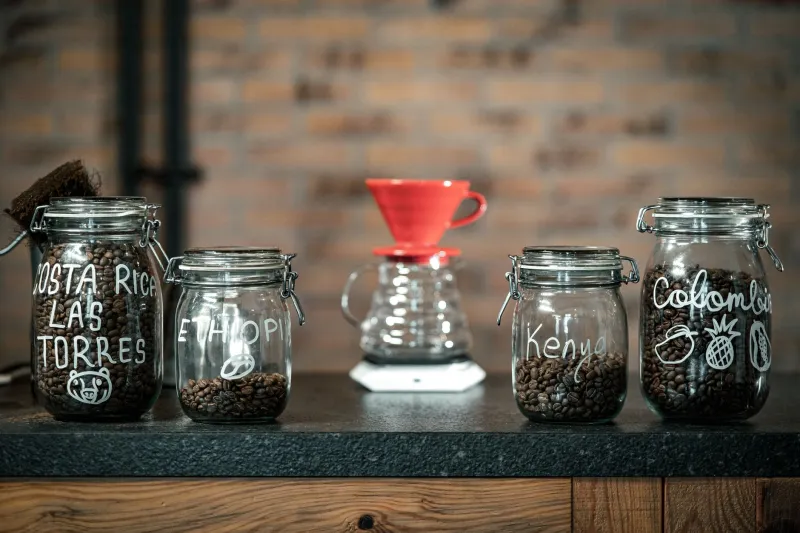
A world-class coffee collection must, by definition, span the coffee-growing world. The three primary producing regions—Africa, the Americas, and Asia-Pacific—each contribute distinct flavor families that cannot be replicated by the others, and a complete collection honors all three.
Africa is the ancestral home of the coffee plant, and its coffees remain among the most distinctive on earth. Ethiopian coffees—particularly those from Yirgacheffe, Sidama, and Guji—are celebrated for their extraordinary floral and fruit complexity, a reflection of the genetic diversity of the region's heirloom landrace varietals. Kenyan coffees, processed under the country's meticulous wet-milling system, produce a bold, winey acidity and a blackcurrant intensity that is immediately recognizable. Rwandan and Burundian coffees, grown on the shores of the Great Lakes, offer a more restrained but deeply rewarding profile of stone fruit and brown spice.
The Americas produce the coffees most familiar to the American palate, though the finest among them are anything but familiar in their complexity. Colombian coffees from the departments of Huila, Nariño, and Antioquia range from caramel-sweet and balanced to bright and stone-fruit-driven. Guatemalan coffees from Antigua and Huehuetenango carry a volcanic minerality and dark chocolate depth. Panamanian Geisha, arguably the most celebrated—and most expensive—coffee varietal in the world, produces cups of such delicate, layered elegance that they have permanently altered the specialty coffee market. Brazilian naturals from Minas Gerais offer a different pleasure: rich, nutty, low-acid, and deeply satisfying.
Asia-Pacific contributes the collection's most distinctive and challenging offerings. Indonesian coffees—Sumatran Mandheling, Sulawesi Toraja, Flores—are processed using the wet-hulling method unique to the region, producing coffees of unusual earthiness, full body, and complex herbal and cedar character. Yemeni coffees, grown on ancient terraced farms at extraordinary altitudes, carry a wild, spiced intensity that connects the modern cup to the very origins of the global coffee trade.
Varietal Diversity: The Genetic Dimension
Beyond geography, a complete collection encompasses varietal diversity—the recognition that different coffee plant cultivars produce fundamentally different cup experiences even when grown in the same region. A collection that offers only commodity-grade Arabica misses the extraordinary range available to the dedicated enthusiast.
The Geisha varietal, originally from Ethiopia and now grown in Panama, Colombia, and Japan, produces a cup of unparalleled floral delicacy. Bourbon, one of the oldest cultivated Arabica varieties, offers a characteristic sweetness and fruit brightness found in coffees from Rwanda, El Salvador, and Brazil. Typica, the varietal from which most modern cultivars descend, produces coffees of elegant simplicity and transparency. SL28 and SL34, developed in Kenya by Scott Laboratories in the 1930s, contribute the bold acidity and complex fruit character for which Kenyan coffee is celebrated worldwide.
A complete collection includes representatives of these major varietals alongside rarer cultivars—Pacamara, Maragogipe, Laurina—that reward the curious and the adventurous.
Processing Methods: A Spectrum of Possibilities
No complete collection can rely on a single processing method. The manner in which a coffee cherry is transformed from fruit to exportable bean has a profound effect on the cup, and a well-curated lineup offers the full spectrum.
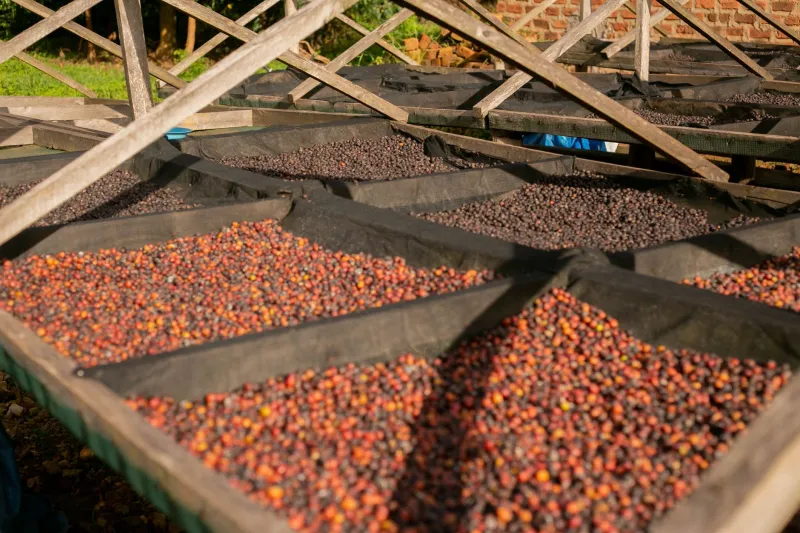
Washed coffees, in which the fruit is removed before drying, produce the most transparent expression of origin character—clean, bright, and analytically precise. Natural coffees, dried with the fruit intact, develop intense sweetness and fruit complexity that can border on the extraordinary. Honey-processed coffees occupy a thoughtfully considered middle ground, retaining some fruit sweetness while preserving more of the bean's inherent character than a full natural.
Exploring all three processing styles—ideally from the same origin—is one of the most educational experiences available to a serious coffee enthusiast, and a complete collection makes this comparison possible.
How to Navigate a Complete Collection With Intention
Faced with the full breadth of what a luxury coffee collection offers, the question is not simply what to buy—it is how to explore systematically enough to develop genuine understanding, while remaining open to the unexpected pleasures of discovery.
We recommend beginning with a geographic anchor: select one origin that interests you, and explore it across multiple farms, varietals, and processing methods before moving to the next. This approach builds the kind of contextual knowledge that makes subsequent discoveries more meaningful. A cup of Kenyan AA means something different—and tastes more complex—to someone who has already spent time understanding Ethiopian coffees and Colombian coffees than it does to someone approaching it without that context.
Above all, approach the collection with patience. The complete range of what premium coffee has to offer is not absorbed in a season—it is a years-long education that rewards consistent attention, careful note-taking, and an ever-expanding palate.
At Fusion 20 Luxury Beans, we have assembled our collection precisely for this kind of journey. Every bean in our lineup has been selected because it contributes something irreplaceable to the whole—because it represents, in its particular way, the best that its origin, varietal, and craft have to offer. The collection is complete because coffee, at its finest, is inexhaustible.