Landscapes in the Cup: Learning to Read the Microclimate Signatures of Single-Origin Coffee
There is a tendency among even serious coffee enthusiasts to treat a single-origin label as a destination—a fixed point on the map that reliably delivers a known experience. Ethiopia Yirgacheffe arrives, and one expects bergamot and stone fruit. A Guatemalan Huehuetenango appears, and the palate braces for dark chocolate and walnut. These associations are not wrong, exactly. They are simply incomplete.
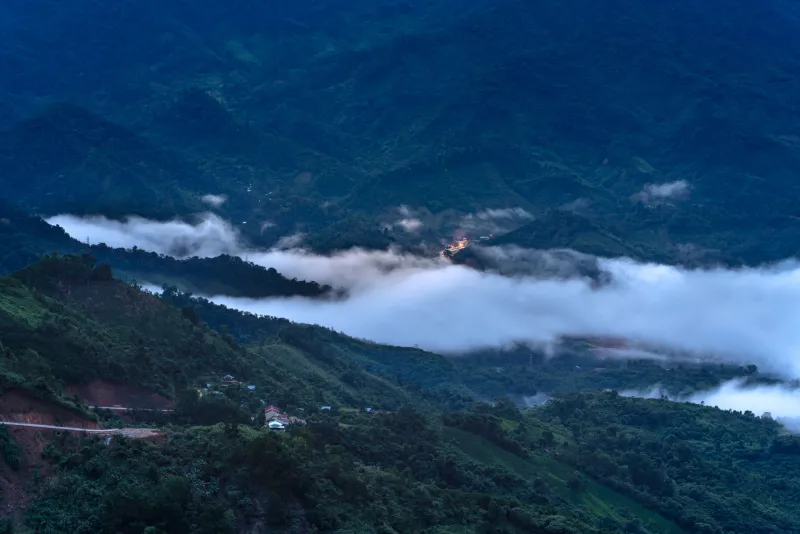
The truth is that geography, at the scale most coffee labels employ, is an enormous abstraction. A named region can encompass dozens of distinct microclimates, each producing beans that carry their own fingerprint—shaped by altitude, slope orientation, canopy cover, mineral content, and the precise rhythm of dry and wet seasons. To taste a coffee without attending to these variables is to read a novel while skipping every other chapter.
At Fusion 20 Luxury Beans, we source with the conviction that the most rewarding cup is one that reveals something specific about a specific place. What follows is a framework for developing the perceptual vocabulary to receive that specificity.
Why Altitude Is the First Variable to Understand
Elevation is the most consequential factor in flavor development, and it operates through a beautifully simple mechanism: temperature. At higher altitudes, cooler air slows the maturation of the coffee cherry. This extended ripening window allows more complex sugars and organic acids to develop within the seed—what we call the bean. The result is a cup with brighter acidity, more layered aromatics, and a finish that lingers with intention.
Beans grown at lower elevations ripen more quickly, yielding a rounder, often more chocolatey profile with less aromatic complexity. Neither is inferior in isolation; they are simply different instruments playing different registers.
When tasting across lots from the same named origin, begin by asking what you know about the elevation of each farm. A Peruvian lot from 1,800 meters and one from 1,200 meters, even when processed identically, will behave differently in the cup. Training yourself to anticipate and then confirm these differences is the first step toward genuine microclimate literacy.
Soil as Subtext
If altitude sets the tempo, soil composition writes the melody. Volcanic soils—prevalent across much of Central America and parts of East Africa—are exceptionally porous and mineral-rich, contributing a clean brightness to the cup that many tasters describe as crystalline. The drainage these soils provide prevents waterlogging, keeping root systems healthy and nutrient uptake efficient.
Contrast this with the red clay soils common in parts of Brazil and certain Indonesian growing regions. These soils retain moisture longer, producing beans that tend toward heavier body and earthier, more muted flavor profiles. Neither is a flaw. They are expressions.
A practical exercise: source two lots from the same country but from geologically distinct sub-regions. Brew them side by side using identical parameters—same grind size, same water temperature, same brew ratio. What you taste in the contrast is, in large part, what the earth contributed.
The Role of Canopy, Rainfall, and Shade
Microclimate is not only a matter of altitude and soil. The presence or absence of shade trees, the distribution of rainfall across growing seasons, and even the direction a hillside faces relative to prevailing winds all exert measurable influence on the final cup.
Shade-grown coffees, particularly those cultivated beneath a diverse canopy of native trees, often exhibit greater aromatic complexity. The trees moderate temperature swings, and their leaf litter contributes organic matter to the soil. Coffees grown in full sun tend to produce higher yields but can sacrifice the layered nuance that shade cultivation encourages.
Rainfall timing matters, too. Regions that experience a pronounced dry season followed by a concentrated wet season often produce beans with more defined structure—the stress of the dry period concentrates sugars, and the subsequent bloom of moisture triggers a synchronized flowering that leads to more uniform cherry development.
Building a Tasting Practice That Detects These Differences
Developing microclimate sensitivity is not a matter of innate talent. It is a practice, built through repetition and intentional comparison. The following habits will accelerate your progress considerably.
Keep a tasting journal. Record not just flavor impressions but the known variables: elevation, soil type (when available), processing method, roast date, and brew parameters. Over time, patterns will emerge that connect specific variables to specific sensory outcomes.
Conduct systematic comparisons. Rather than rotating through your collection at random, dedicate tasting sessions to a single variable. Taste three coffees from the same origin at different elevations. Then taste three coffees from different origins at the same elevation. The discipline of isolating variables is borrowed directly from the sciences, and it works.
Slow down the aromatic phase. Before the first sip, spend thirty seconds with the dry grounds and then again with the bloom if you are using a pour-over method. Microclimate-driven differences often announce themselves most clearly in the aromatics, before the palate's blunter instruments take over.
Seek out producer-specific lots. When a roaster offers beans traceable to a specific farm or cooperative rather than a broad regional blend, that is an invitation to engage with genuine microclimate specificity. At Fusion 20 Luxury Beans, our sourcing philosophy prioritizes exactly this level of traceability, because we believe the story of a place is inseparable from the flavor in your cup.
From Passive Enjoyment to Active Discovery
The geologist who reads a canyon wall does not see only rock. She sees time—layers of deposition, episodes of volcanic activity, the slow work of water over millennia. The coffee enthusiast who has cultivated microclimate literacy reads a cup with comparable depth. She tastes not merely flavor, but geography, season, and the specific decisions of a specific farmer on a specific hillside.
This is what distinguishes the collector's relationship with rare beans from the consumer's relationship with commodity coffee. The former is engaged in a dialogue with the land. The latter is simply satisfying a craving.
We invite you to pursue the former. Your palate, given sufficient attention and worthy material, is more than capable of the conversation.